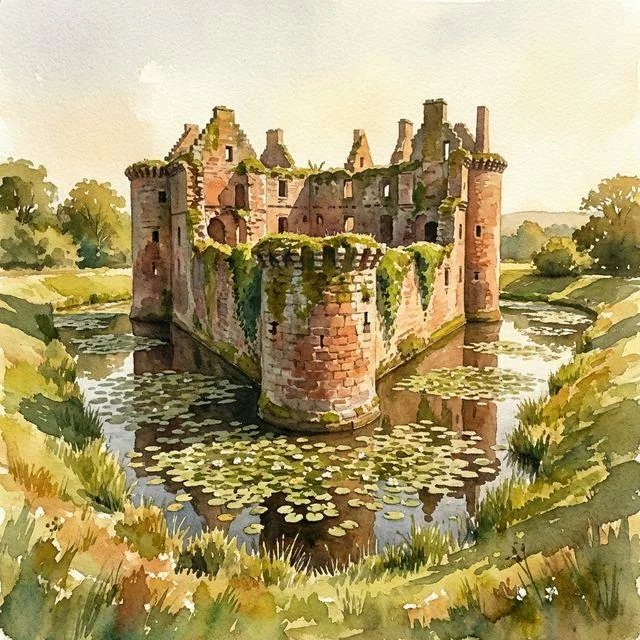
The summer of 1545 had been unkind to Caerlaverock Castle.
The moat smelled of low water and rot, the Solway heat pressing down on the red sandstone walls until they seemed to breathe. Inside, the castle breathed too — its corridors carrying sounds from room to room, voices travelling through stone the way water travels through cracks, finding passages that shouldn't exist.
Marion heard everything. That was the trouble with being a servant.
She had worked the Maxwell household since her fourteenth year, had learned to move quietly through rooms where men discussed things they didn't want discussed, had learned to keep her face empty while her ears stayed full. She was good at her work. She was, she understood, invisible. Right up until she wasn't.
The night she was seen with him — Robert's nephew, barely twenty, whose name she had already made herself stop thinking — she had been carrying linens. That was all. They had spoken for less than a minute in the torchlit passage outside the great hall. She hadn't even put the linens down.
Robert Maxwell, 5th Lord Maxwell, saw it differently.
He came to her room before dawn on a June morning. She heard his footsteps in the corridor and knew them immediately — recognised the particular weight of a man who had decided something. She sat up in bed. She didn't scream. There wasn't any point.
What happened in that room, the castle kept to itself.
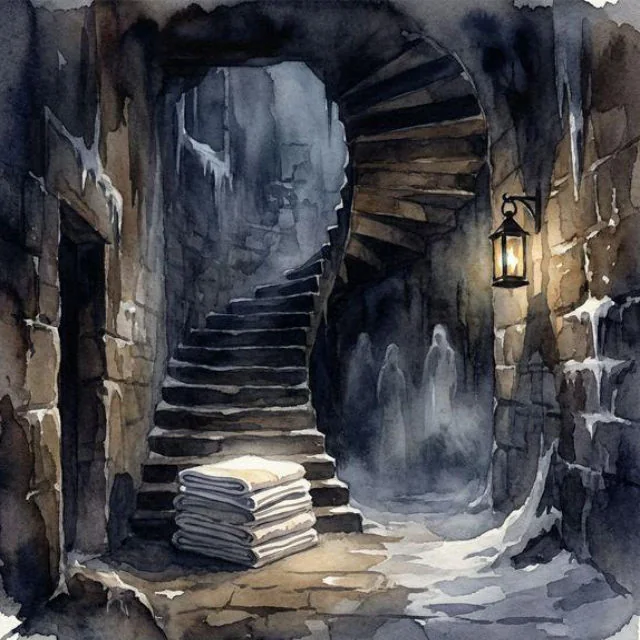
By morning she was gone, and the linens she'd been carrying were found folded neatly at the foot of the staircase, as though she'd set them down carefully before whatever came next. No one asked too many questions. Servants disappeared. The border country was violent and the times were worse, and Robert Maxwell was not a man whose household staff lodged complaints.
The green dress was the one she'd worn on feast days. Someone found it later, folded in her chest, never collected. It was a good dress. It seemed a waste to bury it.
The sightings began that same autumn.
The first was a man-at-arms named Douglas Hepburn who swore, with the particular conviction of someone who had stopped caring whether he was believed, that he saw a woman in the upper window of the east tower at three in the morning. Green dress. Face he couldn't make out. Looking down into the courtyard with the stillness of someone who had been waiting a long time and expected to wait longer still.
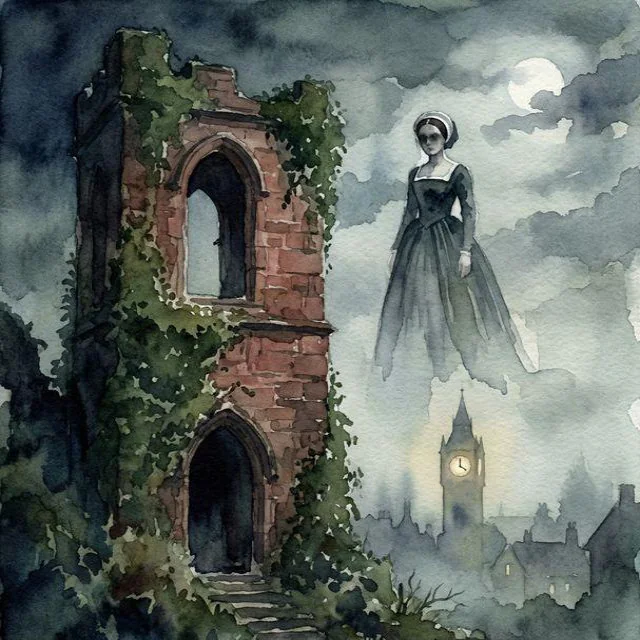
He threw his cap at the window. He could not have said why. The figure didn't move.
Then there was the steward, a Fleming who had been with the Maxwells for six years and who left their service the following spring for reasons he would not specify. He had been walking the corridor outside the great hall — the same corridor, though he didn't know it — when he felt the temperature drop so suddenly and completely that his breath misted in June air. He stopped. He said later that he had heard, just at the edge of hearing, something that might have been footsteps, or might have been the sound of a woman setting something down — a careful, deliberate sound, like a person concluding an argument.
He turned around and went back the way he'd come.
Robert Maxwell himself said nothing. He went to his bed at the usual hour, rose at the usual hour, managed his estates and his politics with the same iron practicality he'd always brought to both. But his household noticed things. He stopped using the east tower. He stopped walking the corridor after dark. He developed, in his final years, a habit of sitting with his back to the wall and his face to any door he occupied, and when asked about it he said only that he preferred to see who was coming.
He died in 1552. His room, the servants said, was cold on the morning they found him. Cold in August, cold with every window shut, cold in a way that had nothing to do with weather or season. And on the floor beside his bed, inexplicably, were several threads of green wool, as though something had caught on something in the dark.
The castle fell to the Covenanters in 1640, its walls partially demolished, its great hall open to the sky. After that it was ruins, and ruins will attract their own stories, and over time no one could say with certainty what was true and what had been improved in the retelling.
But the woman in green remained a constant.
Different centuries, different witnesses, the same figure — at the window, near the moat, drifting through the roofless corridors with the unhurried patience of someone who has nowhere else to be. Accounts differed.
A few, the ones who'd looked longest, said neither.
They said she looked like a woman who already knew exactly where everything was. Who had, in her own time, in her own way, settled every account.
Who was simply watching, now.
Making sure.
No record identifies the woman described in these accounts.
The castle remains standing.