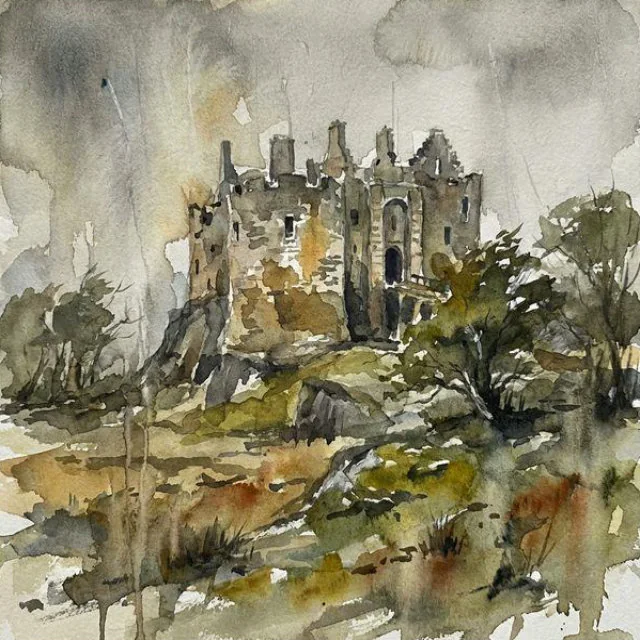
Dirleton Castle stands on a rocky outcrop in the village of Dirleton, East Lothian, twelve miles east of Edinburgh—the oldest parts of the structure date to the thirteenth century. The castle contains a pit prison, connected by a passage to the great hall above. In 1649 and 1650, six women from the parish of Dirleton were held in that prison and tried for witchcraft in the hall above.
Four of the six were executed. The fate of the remaining two is not recorded.
The confession of Agnes Clarkson, widow, given in June 1649 and transcribed by the presbytery led by Johne Makghie, minister of Dirleton Kirk, survives in the historical record.
It states that eighteen weeks before her arrest, Agnes had been visited at her home by a woman from Longniddry. The woman from Longniddry had, at that point, already been burned for witchcraft.
Agnes’s testimony describes what the woman did on arrival. She used, the record states, fearefull curses and execrations, intysing the said Agnes to become the devill’s servant. The figure then appeared, Agnes testified, in the liknesse of a black dun dogge and went up and doun the hous, and seised upon the said Agnes her cloths.
The confession was given in the pit prison beneath the great hall. Whether it was given under physical duress is not specified in the surviving record. The presbytery considered it sufficient.
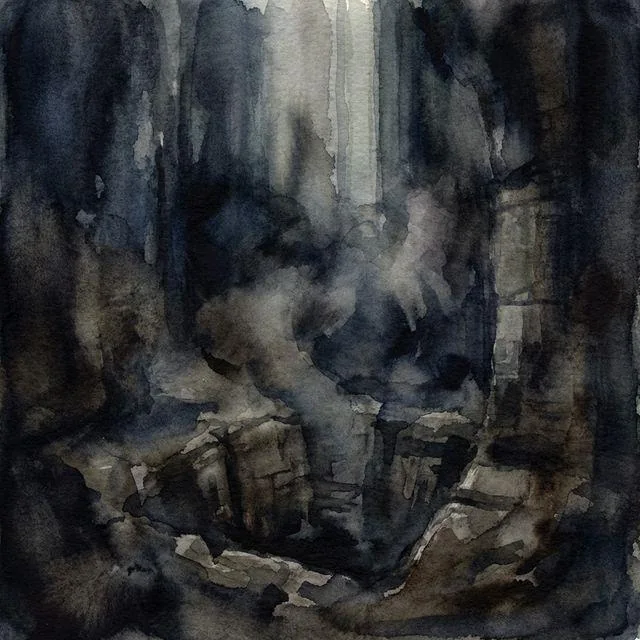
What the confession describes is this: a dead woman, already executed for the same crime for which Agnes was now being tried, returning to the home of a living woman and inducing her to confess to something.
Whether the presbytery considered this sequence — the dead recruiting the living into the very circumstances of their own death — is not recorded.
The confession was taken at face value as evidence of witchcraft. The logic of what Agnes described, if taken at face value in a different direction, was not pursued.
Agnes named others. Manie Halieburton. Patrik Watsone, Manie’s husband. Bessie Hogge.
Each of them was brought down into the pit. Each of them confessed. Each confession named further names.
The woman from Longniddry is not named in any account located for this record. She had already been executed before Agnes was arrested. Her own confession, if it survives, has not been located. Whether she named Agnes as an associate before her death is not established.
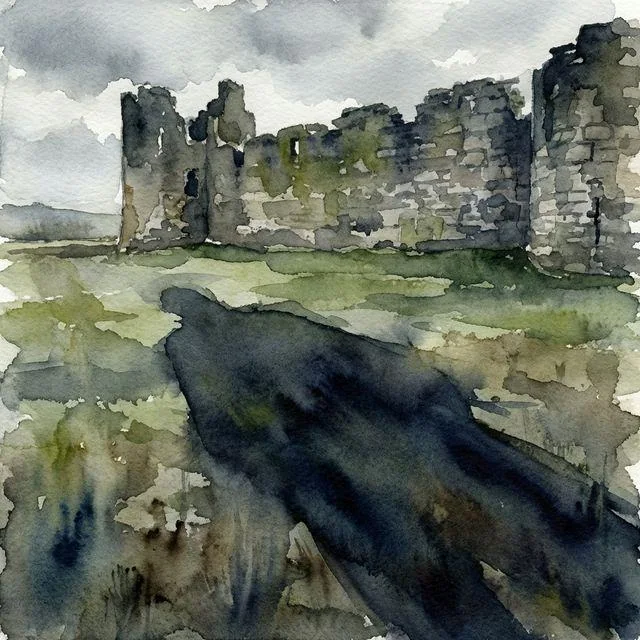
In June 1649, during the period of the trials, a figure was observed on the grassy green below the castle’s eastern wall.
The figure was large. It was described at the time as a shadow — not cast by anything visible, present in conditions where no shadow of that kind should have been possible. Those who saw it concluded that it was the devil.
Whether the figure was connected to the trials, to the pit prison, to the woman from Longniddry, or to nothing beyond the particular quality of fear that had settled over the parish that summer, was not determined.
It was seen on more than one occasion. It was seen by more than one person.
It was always in the same place, below the eastern wall, between the castle and the village.
Between the pit and the world outside.
Electronic equipment brought into the pit prison has been reported to malfunction, with no mechanical explanation. These reports span several decades and come from multiple independent sources. They are noted here without interpretation, as they have been reported.
The pit prison is accessible to visitors.
The passage connecting it to the great hall above is intact.
The great hall is where John Kincaid, the witch pricker, examined Manie Halieburton and Patrik Watsone and announced that he had found the devil’s mark on both of them — on the back of Patrik’s left shoulder, on the left side of Manie’s neck — and that neither location bled, and neither caused pain.
Manie’s response to her own examination is preserved in the record.
She said that her daughter had been the cause of all her woe and that she wished her daughter had never been born.
She said this in the great hall, above the pit.
Whether the hall can be heard from the pit, or the pit from the hall, is not established.
The passage between them remains open.
No record confirms the accounts described.
The passage between the pit and the hall remains open.